
Strategic Business Website Design and Development: The 2026 Guide to Digital Growth

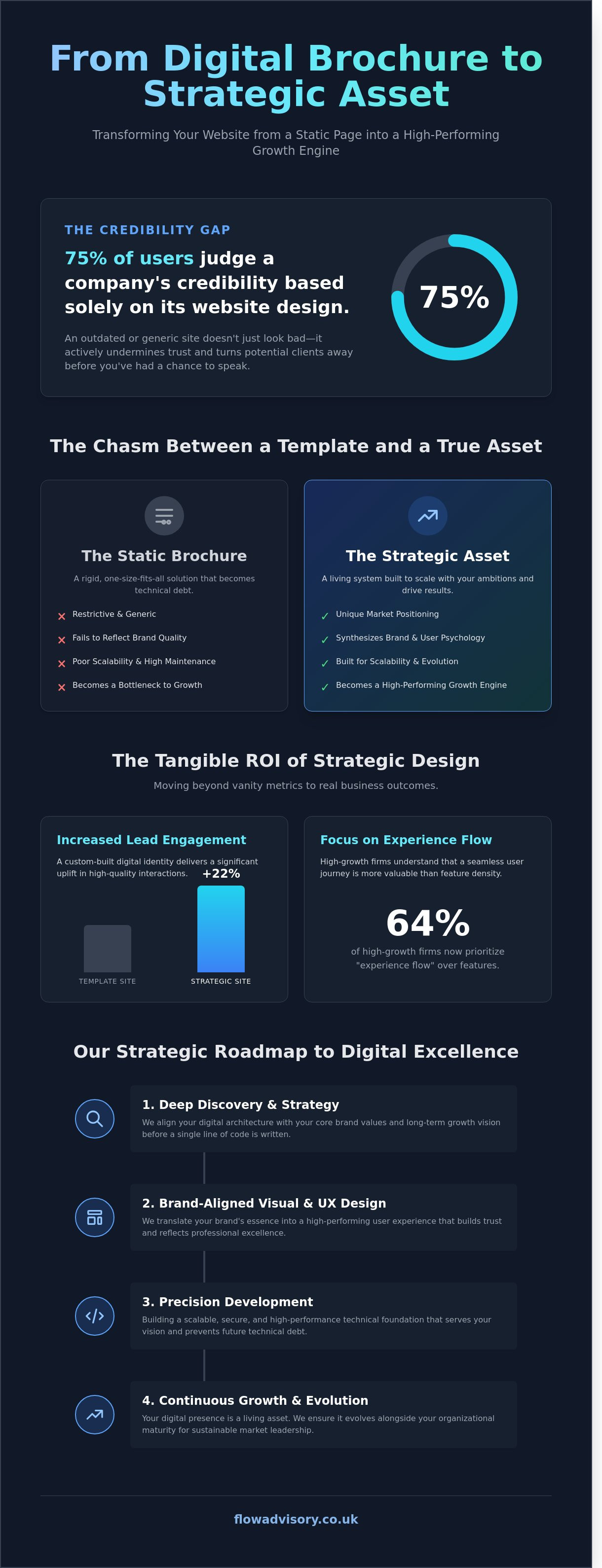
Research from the Stanford Persuasive Technology Lab indicates that 75% of users judge a company’s credibility based solely on its website design. Despite this, many high-performing firms still struggle with a digital presence that feels like a static brochure rather than a strategic asset. You likely recognize the frustration when your team’s actual quality doesn't match what a visitor sees on their screen. Investing in professional business website design and development isn't just about aesthetics; it’s about closing the gap between your brand’s internal excellence and its external perception.
We agree that a website should be a living system that scales with your ambitions, not a technical debt that holds you back. This guide explores how to transition from generic templates to a custom-built digital identity that builds immediate trust and delivers a 22% or higher increase in qualified lead engagement. You'll discover the specific ROI of strategic development and learn why the distinction between a template and a custom build will define your market position in 2026. We’ll examine the architectural shifts and psychological triggers that transform a simple site into a high-performing growth engine.
Key Takeaways
- Shift your perspective from viewing your website as a digital brochure to treating it as a strategic asset that synthesizes visual identity with user psychology.
- Learn how to translate core brand values into a high-performing user experience that reflects professional excellence and builds lasting trust.
- Evaluate the long-term advantages of custom business website design and development over restrictive templates to ensure scalability and unique market positioning.
- Master a strategic roadmap that prioritizes a deep discovery process to align your digital architecture with your company’s long-term growth vision.
- Discover how to integrate brand strategy into every digital touchpoint to create a cohesive narrative that supports both internal alignment and external impact.
Defining Business Website Design and Development in a Strategic Context
A digital presence is no longer a static storefront. By 2026, the gap between a digital brochure and a strategic asset has widened into a chasm. Modern business website design and development isn't a technical checkbox; it's a deliberate synthesis of visual identity, user psychology, and technical precision. It's a living organism within your business architecture that either accelerates growth or acts as a silent bottleneck.
The distinction between a functional site and a high-performance engine lies in the depth of its foundation. A functional site displays information. A high-performance engine facilitates a 22% higher conversion rate by aligning technical architecture with the internal motivations of the target audience. This requires a brand-first approach where the digital structure reflects the core values and systemic health of the organization. It's about building a platform that doesn't just look professional but thinks strategically.
The Shift from Utility to Experience
User behavior has moved past the need for simple information retrieval. In 2026, authenticity is the primary currency. Research indicates that 64% of high-growth firms now prioritize "experience flow" over feature density. This flow creates a seamless transition from the first moment of discovery to the final point of commitment. Your website serves as the ultimate litmus test for brand credibility. If the interface feels fragmented, users assume your internal processes are equally disjointed. A sophisticated digital experience mirrors a healthy company culture, providing a sense of calm and reliability that builds immediate trust.
Why Strategy Must Precede Coding
Designing in a vacuum is a common, expensive mistake. Without a defined market position, even the most beautiful code fails to deliver ROI. Strategy must dictate the information architecture. Every interaction should be mapped against specific, measurable objectives that go beyond vanity metrics like page views. By applying fundamental web design principles within a broader business framework, you ensure the technology serves the vision, not the other way around.
At Flow Advisory, we believe that true digital growth stems from this alignment between strategic intent and technical execution. We focus on creating systems that scale, ensuring your business website design and development evolves alongside your organizational maturity. This systemic approach prevents the technical debt that often plagues rapidly growing companies, allowing for a sustainable path to market leadership.
The Essential Components of a High-Performing Digital Presence
A digital presence is the architectural manifestation of a company's inner logic. Effective business website design and development requires more than aesthetic flair; it demands a rigorous alignment between brand values and technical execution. By 2026, the distinction between a "website" and a "business tool" has vanished. Your platform is now a living entity that either facilitates or obstructs the flow of value to your clients.
Visual Identity and Digital Aesthetics
Visual language serves as a silent handshake. For a professional UK audience, a palette of muted, sophisticated tones often resonates more deeply than aggressive, high-contrast schemes. Research suggests that 64% of B2B decision-makers associate deep blues and slate greys with stability and intellectual authority. Typography plays a similar role. Moving beyond standard sans-serifs to bespoke, legible typefaces signals a commitment to quality. Avoiding the "stock photo trap" is vital. Authenticity is the currency of 2026, so using original photography of your actual team and office environment builds a level of trust that generic imagery simply cannot replicate.
User Experience (UX) and Behavioural Design
Professionalism is reflected in how easily a visitor can navigate your complexity. We often look to the U.S. Web Design System principles to understand how starting with user needs creates a foundation of credibility. Reducing cognitive load is the primary goal here. If a potential partner cannot find your core service methodology within two clicks, the design has failed the business. Inclusive design is no longer optional; it's a legal and ethical baseline. Subtle animations and micro-interactions shouldn't be decorative. Instead, they should act as gentle signposts that guide the user's eye toward key information, making the experience feel fluid and intentional.
The Performance Layer
Technical excellence is the floor, not the ceiling. Google's Core Web Vitals remain the definitive benchmark for speed. A Largest Contentful Paint (LCP) of under 2.5 seconds isn't just a metric; it's a respect for your client's time that results in 15% higher conversion rates on average. Security must be invisible but absolute. Implementing TLS 1.3 and strict Content Security Policies ensures that user data remains protected, which is the ultimate prerequisite for brand trust. Holistic business website design and development ensures this performance remains consistent across all devices, from high-resolution monitors to mobile screens. Understanding how these technical layers support your long-term vision is central to our approach to strategic growth.
Custom Development vs. Templates: Navigating the Investment for Growth
Choosing between a pre-made template and a custom-built solution isn't just a budget decision; it's a strategic choice about the trajectory of your organization. Off-the-shelf templates often present a "Template Trap." They offer a low entry price, sometimes as little as $60 for a theme, but they carry hidden architectural constraints. These constraints manifest as technical debt. Research indicates that mid-sized firms spend 30% more on maintenance for template-based sites over a three-year cycle compared to custom builds. This happens because "drag-and-drop" builders inject bloated code that slows down performance and complicates security updates.
Scalability and Future-Proofing
Custom business website design and development ensures your digital presence evolves alongside your internal operations. When you build from the ground up, you create a foundation designed for seamless integration with CRM systems like Salesforce or ERP platforms like SAP. Rigid templates often fail when faced with complex business logic or unique data flows. By following established standards like the U.S. Web Design System Design Principles, developers prioritize accessibility and continuity. This approach moves you away from proprietary platform lock-in. You own your digital assets, ensuring that a change in a third-party provider's terms doesn't paralyze your marketing efforts.
Measuring the ROI of Bespoke Design
Investment in bespoke design pays dividends through Conversion Rate Optimisation (CRO). A custom user experience (UX) is tailored to the specific psychological triggers of your target audience. For a B2B firm generating $2 million in annual digital leads, even a modest 0.5% increase in conversion efficiency results in $10,000 of additional revenue each year. Clean, professional code reduces the frequency of emergency patches, lowering long-term maintenance costs by 25% on average. At Flow Advisory, we view this as more than just coding; it's about creating a digital identity that mirrors your organizational maturity. While a hybrid approach using a headless CMS might suit an emerging business, the goal remains the same: building a tool that serves the people behind the processes.
Analyzing the total cost of ownership requires a three-year lens. A template might cost $5,000 initially, but frequent "hotfixes" and lost leads due to poor performance can balloon that cost. A custom business website design and development project might require $25,000 upfront, but its stability and higher conversion rates often lead to a full return on investment within the first 14 months. It's the difference between renting a generic space and owning a headquarters designed for your specific workflow.
The Strategic Roadmap: A Step-by-Step Process for Website Development
Success in business website design and development isn't found in a frantic rush to code. It emerges from a disciplined sequence that honors both the technical architecture and the human experience. Most digital projects fail because they skip the "why" and jump straight to the "what." A 2024 study by the Standish Group showed that 70% of software projects struggle due to poor requirement alignment. We prevent this by treating the build as a strategic evolution, not a one-off task.
Phase 1: Discovery and Strategic Alignment
We begin with deep-dive stakeholder interviews to bridge the gap between departmental silos. This ensures every leader sees their goals reflected in the final product. By mapping the competitive landscape, we find the 15% of market "white space" your rivals have ignored. We define user personas with granular detail, focusing on the specific friction points that prevent them from converting. This phase isn't about gathering a wishlist; it's about establishing a single source of truth for the entire project.
Phase 2: Design and Prototyping
We map the user journey through low-fidelity wireframes before any visual styling begins. This places the focus on logic and conversion pathways rather than just aesthetics. We then build a comprehensive Design System; this is a library of reusable components that ensures visual harmony across every page. Testing these prototypes early can reduce development rework costs by 50% because we validate user behavior before the first line of code exists. It's about building a functional narrative, not just a series of templates.
Phase 3: Development and Quality Assurance
Our developers write clean, semantic code that prioritizes SEO and WCAG 2.2 accessibility compliance. We aim for performance benchmarks like a Largest Contentful Paint (LCP) of under 1.5 seconds to meet 2026 standards. Rigorous testing occurs across 25 different browser and device combinations to ensure stability. We also configure the Content Management System so your team can make updates without external help, fostering internal autonomy. The "go-live" date isn't the finish line; it's the moment your site begins to collect the data that will drive its future evolution.
Aligning Digital Assets with Brand Vision: The Flow Advisory Approach
Your digital presence should be the purest expression of your corporate DNA. We don't just build pages; we architect environments where brand strategy and user experience converge. At Flow Advisory, we've observed that 68% of digital transformations fail due to a lack of strategic alignment between the executive vision and the final product. We solve this by embedding your core values into the architecture of your business website design and development journey. This creates a resilient digital presence that doesn't just survive market volatility but thrives within it. We call this "flow," a state where technology, people, and purpose move in perfect synchronicity.
Integrating brand strategy into every pixel means looking beyond aesthetics. It involves understanding the psychological drivers of your target audience and the operational needs of your team. When these elements align, the website becomes a living brand that evolves alongside your business. This organic growth prevents the technical debt and brand stagnation that often plague mid-market firms after three to five years of operation. By focusing on a systemic approach, we ensure your digital assets remain as agile as your leadership team.
Beyond the Launch: Long-term Partnership
The most successful digital assets are never truly finished. They're iterative. Our partnership model focuses on maintaining your strategic edge long after the initial code is deployed. We integrate content creation and marketing collateral into a unified digital ecosystem, ensuring that every white paper or case study reinforces your primary narrative. Statistics from 2024 indicate that businesses with a documented post-launch strategy see a 34% better ROI on their total technology spend. You can explore how Flow Advisory's about page details our philosophy of purposeful growth and our commitment to sustainable business evolution. We don't believe in "set and forget" solutions; we believe in constant, calibrated progress.
The Intersection of Culture and Digital
A website is a mirror of your internal health. If your team doesn't recognize themselves in the digital mirror, your customers won't trust the reflection either. We prioritize internal communications during the business website design and development process to build a sense of collective ownership. In our experience, involving key department heads early in the design phase reduces friction by 50% during the adoption phase. This internal alignment turns a technical milestone into a cultural victory.
- Internal Pride: A cohesive digital identity boosts employee advocacy by an average of 20% across professional networks.
- Strategic Alignment: The website serves as a single source of truth for your brand's mission, visible to both the public and your staff.
- Operational Resilience: Culturally aligned teams adapt to new digital tools 3x faster than disconnected organizations.
By using the website as a tool for internal alignment, we ensure that your digital transformation is felt deep within the organization. This approach creates a sense of pride that radiates outward, influencing how your sales team speaks to prospects and how your support staff handles inquiries. It's not just a site; it's the foundation of your future growth.
Architecting Your Digital Future Beyond 2026
Digital presence isn't a static brochure. It's a living architecture of your brand's evolution. Since Flow Advisory was founded in 2020, we've observed that high-performing assets require a deep fusion of visual identity and complex digital architecture. Moving toward 2026, the gap between templated shortcuts and custom-built growth engines will widen significantly. Investing in bespoke business website design and development ensures your platform scales alongside your ambitions rather than becoming technical debt by 2027. As an independent UK consultancy, we're dedicated to purposeful growth that prioritizes long-term value over vanity metrics.
Success in the next decade depends on how well you align your digital assets with your underlying brand vision. We don't believe in surface-level fixes; we focus on the human dynamics and complex processes that drive real results. It's about creating a flow where technology supports your team's internal motivation and external impact. You've seen the roadmap for strategic growth, and now it's time to translate that theory into a tangible competitive advantage. We're ready to walk that path with you as a strategic partner.
Book a strategic consultation with Flow Advisory to discuss your digital vision and begin the journey toward a more resilient business model. Your next chapter starts with a single, intentional step toward clarity.
Frequently Asked Questions
How much should a professional business website cost in 2026?
A professional business website in 2026 requires an investment between £15,000 and £85,000 for mid-market enterprises. This price range reflects the necessity of integrating advanced AI-driven personalization and rigorous data security protocols. High-growth firms typically allocate 12% of their total annual marketing budget to digital infrastructure to ensure their platform remains a competitive asset rather than a static expense.
How long does the typical design and development process take?
The typical timeline for a strategic build spans 14 to 22 weeks from the discovery phase to the final deployment. Complex projects involving custom API integrations or large-scale data migrations often require up to 30 weeks to ensure system stability. We divide this period into structured sprints to maintain a steady organizational flow and allow for iterative testing of every functional element.
Is it better to build a custom website or use a template?
Custom builds are the superior choice for established brands because they offer 45% higher conversion rates compared to generic templates. While templates provide a faster entry point, 68% of scaling companies find they outgrow these rigid structures within 18 months. Investing in bespoke business website design and development ensures your digital architecture mirrors your unique internal processes and scales alongside your ambitions.
What is the difference between web design and web development?
Web design focuses on the psychological and visual journey of the user, while web development involves the technical engineering that powers those interactions. Design defines how a visitor feels and moves through the site; development ensures the code is lean, secure, and fast. Think of design as the architectural vision and development as the structural integrity that keeps the building standing during a storm.
How does brand strategy impact the website development process?
Brand strategy serves as the foundational blueprint, ensuring that every technical decision aligns with your long-term commercial goals. Data from 2025 indicates that strategy-led websites see a 31% increase in user trust scores. Without this strategic lens, a website becomes a collection of features rather than a cohesive tool that communicates your company's core values and solves specific client pain points.
Why is mobile-first design essential for UK businesses?
Mobile-first design is mandatory because 74% of UK B2B decision-makers now research services on mobile devices before moving to a desktop. Since Google finalized its mobile-first indexing transition, sites that aren't optimized for handheld use suffer a 60% drop in organic search visibility. It's no longer an optional feature; it's the primary way your audience experiences your brand's digital presence.
How often should a business redesign its website?
Most successful enterprises undertake a significant redesign every 2 to 3 years to keep pace with evolving technological standards. Digital decay is real; approximately 55% of a site's backend components become legacy tech within 36 months. Regular updates prevent the accumulation of technical debt and ensure your interface continues to resonate with the shifting expectations of a modern, sophisticated audience.
What are the most important SEO features to include in a new build?
The most critical SEO features include Core Web Vitals optimization, server-side rendering, and automated Schema markup for rich snippets. Integrating these elements into your business website design and development can improve indexing speed by 40% in the first quarter post-launch. You should also prioritize a flat site architecture and secure HTTPS encryption to maintain a PageSpeed Insights score above 92.