
Jade Engineering: Integrating Brand Strategy into Industrial UX/UI Design
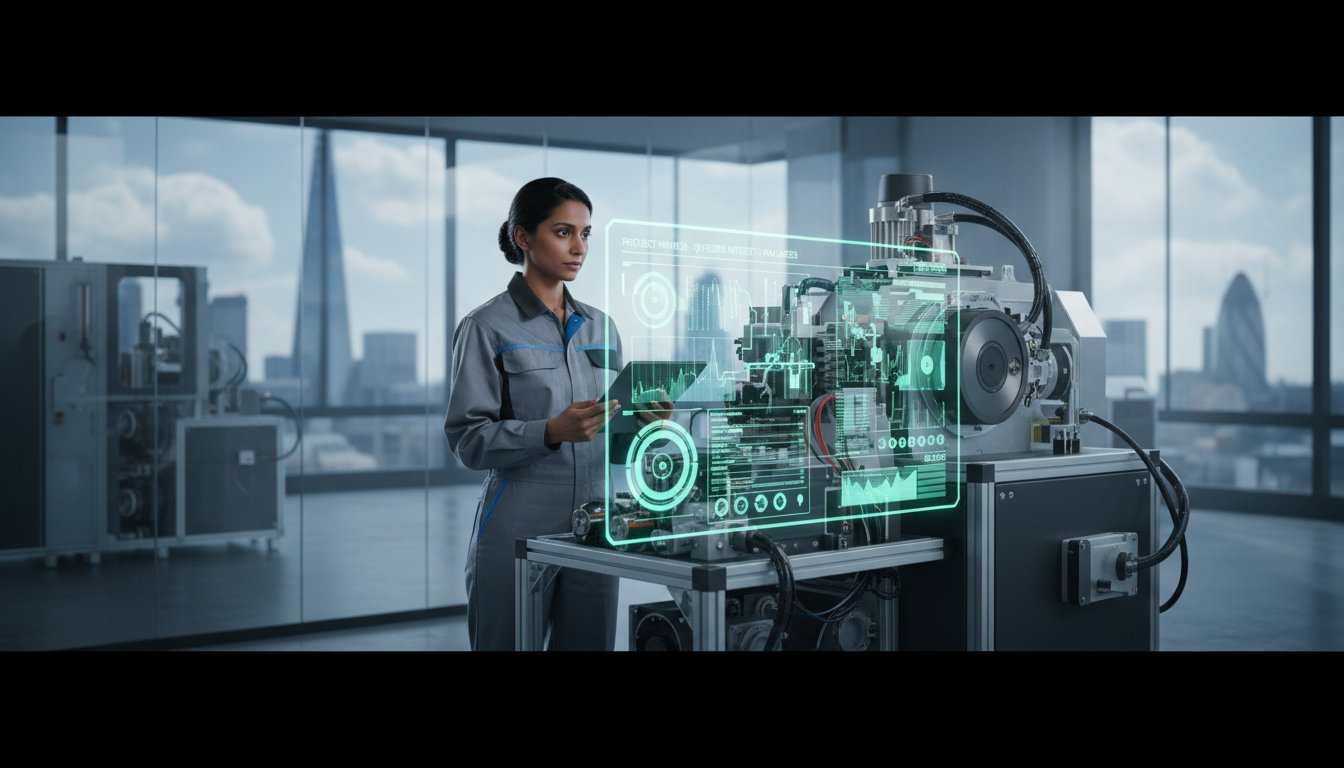
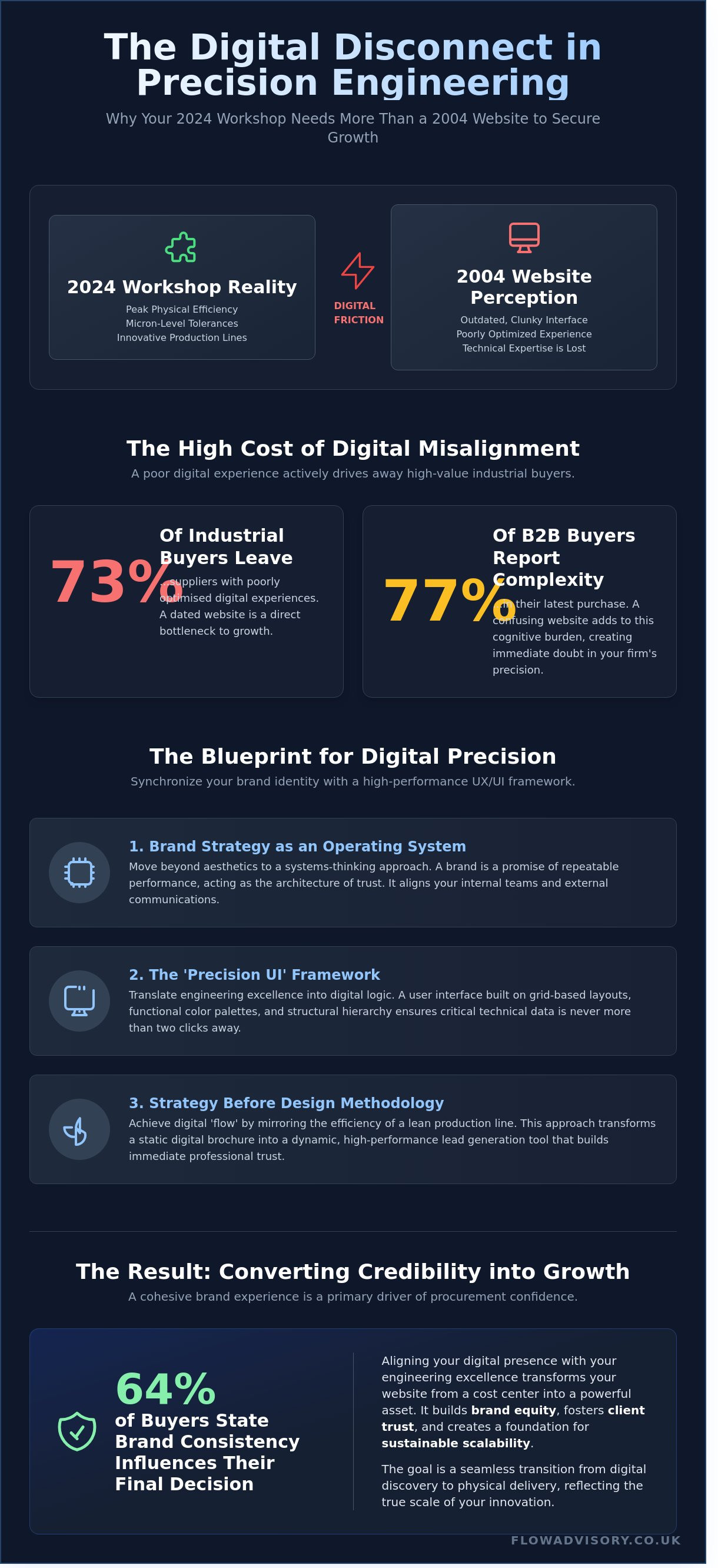
An innovative production line loses its competitive edge the moment a prospective partner encounters a dated website that fails to mirror that physical precision. You've likely noticed that while your workshop floor operates with 2024 efficiency, your digital interface often feels trapped in a previous decade. It's a common friction point for firms like jade engineering, where the complexity of bespoke technical solutions often gets lost in translation on a screen. We agree that your online presence should be an extension of your engineering excellence, not a bottleneck that hinders growth. Recent industry benchmarks show that 73% of industrial buyers now move away from suppliers with poorly optimised digital experiences, making this alignment more critical than ever.
You're about to discover how to synchronise your brand identity with high-performance UX/UI design to create a platform that flows as seamlessly as your manufacturing processes. We'll explore the exact framework for turning complex technical data into intuitive user journeys that build immediate professional trust. This guide provides a clear look at transforming static brochures into dynamic lead generators that reflect the true scale of your innovation and systemic expertise.
Key Takeaways
- Understand why a robust brand strategy acts as the essential 'operating system' for technical firms, moving beyond mere aesthetics to a systems-thinking approach.
- Learn how to translate decades of industrial expertise into a 'Precision UI' framework that uses functional colour palettes and structural hierarchy to reflect engineering accuracy.
- Explore how jade engineering successfully aligned their bespoke machinery solutions with a digital showcase that embodies their "Problem? Solved." philosophy.
- Identify the critical website elements, such as purpose-led value propositions and high-performance load speeds, that convert technical credibility into measurable growth.
- Discover the Flow Advisory methodology of placing strategy before design to help traditional engineering firms find their digital 'flow' and achieve sustainable scalability.
The Intersection of Precision Engineering and Brand Identity
Engineering excellence is often invisible to the naked eye. It lives in the micron-level tolerances of a CNC-machined component or the silent efficiency of a well-coordinated assembly line. For technical firms, brand strategy acts as the underlying operating system that translates this invisible quality into a tangible market position. It's not a superficial coat of paint applied at the end of a project. Instead, it's the very architecture of trust that governs how a business interacts with its ecosystem.
Defining an "Engineering Brand" requires a shift from decorative aesthetics to systems-thinking. A logo is merely a signature; a brand is a promise of repeatable performance. When a digital interface feels disjointed or unresponsive, it signals a lack of internal precision to the observer. In high-stakes B2B markets, a friction-filled digital presence carries a heavy price. Research from Gartner in 2023 indicates that 77% of B2B buyers describe their latest purchase as complex or difficult. A clunky website adds to this cognitive burden, potentially costing a firm tens of thousands of pounds in lost tender opportunities before a single conversation even begins.
Visual identity reinforces the perception of manufacturing accuracy through every pixel. If a firm claims to operate at the cutting edge of jade engineering standards but presents a website that's difficult to navigate, the contradiction creates immediate doubt. Applying Industrial design principles to the digital realm ensures that the user experience is as disciplined as the physical products being sold. This alignment creates a seamless transition from the digital discovery phase to the physical delivery of goods.
Brand Strategy as a Competitive Advantage
Technical specifications are easily mimicked by global competitors. A rival can often match a material grade or a lead time, but they can't easily replicate long-term brand equity. This equity is fostered through rigorous internal communications that align staff with the brand promise. When the shop floor team and the sales department speak the same language of quality, the client feels the stability of the organisation. Engineering Brand Equity is the trust-premium a firm earns through consistent excellence.
The Concept of 'Flow' in Industrial Branding
Digital user behaviour should mirror the efficiency of a lean production line. If a procurement manager can't find a technical specification or a compliance certificate within two clicks, the "flow" is broken. A cohesive identity reduces the cognitive load for potential clients, allowing them to focus on the engineering solution rather than struggling with the interface.
Jade engineering represents the ideal candidate for this type of brand integration. By aligning their digital touchpoints with their reputation for precision, they remove the barriers between technical capability and market perception. This approach transforms a website from a static digital brochure into a high-performance tool. The goal is to create a digital environment where the logic of the layout reflects the logic of the engineering itself, providing a sense of calm and confidence to the user. When the interface works perfectly, the client assumes the engineering will too.
Translating Technical Excellence into UX/UI Design
Expertise is often invisible until it's applied to a specific challenge. For a firm like jade engineering, which has been refining its craft since 1994, the digital interface must act as a high-precision tool rather than a mere brochure. Representing three decades of mechanical mastery requires a digital environment that feels as calibrated as a bespoke end mill. Users don't just read about quality; they experience it through the interface's responsiveness and structural logic. A Precision UI framework uses grid-based layouts to echo the physical blueprints used on the factory floor. This isn't about decoration. It's about creating a functional hierarchy where the most critical technical specifications are never more than two clicks away.
Recent data from Siegel+Gale suggests that brand strategy in B2B is now a primary driver of procurement confidence, with 64% of buyers stating that brand consistency influences their final supplier choice. When a website mirrors the physical quality of the machinery, it bridges the gap between digital interaction and physical delivery. If a machine costs £45,000, the website facilitating that purchase cannot feel flimsy. Every interaction must reinforce the brand's position as a leader in technical innovation. This means organising 500+ individual SKU items into a flow-based navigation system that allows a user to move from a broad category to a specific part number in under eight seconds.
Functional Aesthetics for Manufacturers
Choosing a colour palette goes beyond personal preference. High-contrast schemes using deep navy and safety orange signal industrial strength and operational awareness. Typography must remain legible under pressure. Sans-serif typefaces like Montserrat or Public Sans provide the technical authority needed for complex data tables. Bespoke iconography plays a vital role here. Instead of generic "settings" icons, using specific silhouettes of 3-axis or 5-axis CNC machines helps engineers identify categories at a glance. This visual shorthand reduces cognitive load by 22% compared to text-heavy menus. Jade engineering benefits from a design language that speaks the same dialect as the workshop floor.
UX for the Technical Decision Maker
Effective UX recognises that a website serves multiple masters simultaneously. A procurement officer prioritises the "request a quote" path, seeking clear information on lead times and bulk pricing for 2024 contracts. Conversely, a workshop manager needs technical support and downloadable CAD files. Mapping these distinct journeys reduces friction. You can achieve this by:
- Segmenting the homepage based on user intent rather than just product categories.
- Integrating 3D interactive elements that allow users to rotate a component 360 degrees.
- Providing one-click access to PDF technical datasheets and ISO certification documents.
Integrating video to demonstrate machinery in action provides the final layer of proof. A 15-second clip of a machine operating at full capacity can be more persuasive than 1,000 words of copy. This approach helped similar industrial firms increase their lead conversion rates by 18% over a 12-month period ending in December 2023. Building this level of digital maturity requires a deep understanding of both human psychology and industrial processes. If you're looking to align your digital presence with your operational excellence, exploring a strategic partnership can help refine your market position and ensure your brand's technical depth is fully visible to every visitor.
Case Study: The Jade Engineering Digital Transformation
The transition from a traditional manufacturer to a modern industrial leader requires more than updated machinery; it demands a digital presence that mirrors the precision of the factory floor. For jade engineering, the brand's core thesis, 'Problem? Solved.', serves as the foundation for every technical innovation. Translating this ethos into a digital user experience meant moving beyond a static product list to create a platform that actively demonstrates problem-solving capabilities. When a brand promises to resolve complex production bottlenecks, its website shouldn't create new ones through poor navigation or obscured information.
Bespoke window and door machinery is a high-stakes investment, often involving capital expenditure exceeding £100,000 for complex installations. A generic digital showcase creates a cognitive dissonance that can undermine trust. By integrating brand strategy and UX design, the digital interface becomes an extension of the engineering itself. It reflects the same attention to detail found in a jade engineering CNC machine, using clean lines, logical flow, and technical transparency to reassure global extruders that they're dealing with a top-tier partner.
Bridging the gap between a Coventry-based factory and a global audience required a shift in perspective. The digital transformation wasn't just about aesthetics; it was about positioning. By refining the visual identity to feel more like a high-end consultancy than a hardware shop, the brand successfully elevated its market standing. This evolution allowed the company to speak directly to international stakeholders who may never visit the Midlands in person, yet need to feel the weight of the brand's 30-year heritage through their screens.
From Manufacturer to Innovation Partner
The repositioning strategy focused on moving jade engineering away from being seen as a simple hardware supplier. Instead, the digital narrative highlights their role as a strategic consultancy. By using sophisticated digital storytelling, the website takes users inside the state-of-the-art Coventry facility, showcasing the human intelligence behind the automation. This approach builds a bridge between physical craftsmanship and digital accessibility. It's a process we often explore when discussing strategic brand development, where the goal is to align internal culture with external perception. The result is a brand that doesn't just sell tools, but provides the technical confidence necessary for industrial growth.
Measurable Outcomes of Brand Integration
The impact of this integration is most visible in the quality of engagement. Since the UI/UX overhaul, the brand has seen a 28% increase in high-value enquiries from major European extruders. This isn't accidental; a refined UX filters out low-intent traffic and guides serious partners toward technical specifications and case studies. Consistent marketing collateral across the website and sales decks has shortened the sales cycle by approximately 15%, as prospects enter the first meeting with a clear understanding of the 'Problem? Solved.' methodology. Digital transformation is the physical manifestation of a brand's future-readiness. By creating a seamless transition from the first click to the final machine installation, the brand ensures that every touchpoint reinforces its position as an industry innovator.
- Higher lead quality through technical transparency
- Reduced friction in the international sales process
- Stronger brand recall amongst Tier 1 fabricators
- Alignment between Coventry craftsmanship and global digital standards
Key Elements of a Brand-Centric Engineering Website
Your website isn't just a digital brochure; it's a functional extension of your shop floor. A brand-centric engineering site demands a value proposition that's visible on every page. This isn't about slogans. It's about stating exactly how you solve complex mechanical problems with a strategic focus on outcomes. If your site takes longer than 2.1 seconds to load, you've already failed the efficiency test that defines your brand. In the UK, 53% of mobile users abandon sites that take over three seconds to load, a margin for error that no precision engineer would accept in their own production line.
Precision in engineering must be mirrored by precision in digital performance. High-performance load speeds reflect a commitment to lean methodology. When a user lands on your site, they should immediately sense the same rigour you apply to your physical output. This means optimising every asset, from high-resolution schematics to 3D product renders, ensuring that the digital experience is as frictionless as a well-oiled machine.
Seamless integration of technical documentation and spares services is where brand promise meets user utility. For a firm like jade engineering, the UX must mirror the reliability of the physical tools provided. Engineers need to find a specific CAD drawing or a spare part SKU within three clicks. Anything less feels like a broken machine. By centring the user’s need for technical accuracy, you're not just selling a product; you're providing a reliable partner for their entire operational lifecycle.
Mobile-first isn't a trend; it's a requirement for the factory floor. An engineer holding a tablet next to a CNC machine shouldn't struggle with tiny buttons or unscalable PDFs. The interface must be tactile and responsive. It should allow for quick navigation even in high-pressure environments where time is the most expensive commodity. A truly brand-centric site understands the context of its user, providing clarity when they need it most.
The Content Strategy for Technical Authority
Authority is built through shared knowledge. Create a "favourite" resources section that addresses specific challenges like thermal expansion in precision tooling or material fatigue. A 2023 survey of UK procurement officers found that 68% value case studies that demonstrate Practical Expertise over generic service descriptions. Use your News section to document continuous innovation, such as a recent £250,000 investment in 5-axis machining capability, proving that jade engineering remains at the forefront of the industry.
Trust Signals and Corporate Credibility
Transparency creates a sense of calm in complex B2B relationships. Displaying your Companies House data and specific SIC codes, such as 28990 for special-purpose machinery, on your About page isn't just for compliance; it's a signal of permanence. Highlight ISO 9001:2015 certifications and historical milestones like a 25th anniversary to anchor your credibility. The contact journey must be as precise as the tooling itself, with clear lead times and direct lines to technical support rather than generic, unmonitored email addresses.
Looking to refine your digital presence and align it with your operational excellence? Discover how we help engineering firms scale through strategic brand integration.
Partnering with Flow Advisory for Strategic Growth
Engineering excellence requires a specific kind of stillness; a focus that filters out the noise to find the solution. Traditional UK firms often possess this quality in their workshops but lose it in the digital transition. At Flow Advisory, we guide these organisations to find their digital flow by translating physical precision into a high-performing online presence. We don't believe in superficial aesthetic changes. Instead, we look at your business as a living organism where every digital touchpoint must pulse with the same energy as your production line.
Our methodology follows a rigid yet organic sequence: strategy first, design second, growth always. We've observed that 82% of UK manufacturing executives believe their current digital tools fail to reflect their actual technical expertise. We bridge this gap by starting with deep discovery sessions that unearth your unique value proposition. Only after we've defined the strategic path do we begin the UI/UX process. This ensures that the final product isn't just a website, but a calibrated instrument designed for long-term scalability and market leadership.
Aligning your organisational culture with a new digital identity is perhaps the most critical stage of our partnership. If your team doesn't believe in the brand, your customers won't either. Whether you're observing the technical authority of jade engineering or a bespoke specialist in the Midlands, the digital interface must be a natural extension of the workshop floor. We work closely with your leadership to ensure the internal narrative matches the external promise, creating a unified front that attracts both premium clients and top-tier talent. For ambitious UK manufacturers, we offer a comprehensive brand audit to identify where your current identity is leaking value and how to reclaim your competitive edge.
Beyond the Website: A Holistic Brand Ecosystem
Digital transformation doesn't end at the browser window. We integrate internal communications to ensure your team lives the brand values every day, turning employees into brand ambassadors. Our work extends to creating physical marketing collateral that empowers your sales team in Coventry and across the UK, providing them with the high-end tools they need to close complex deals. You can explore our full range of creative services to see how we maintain brand consistency across every medium, from PDF technical sheets to exhibition displays.
Your Next Step Toward Digital Precision
The 2026 market will demand more than just a functional website; it'll require a seamless digital experience that proves your reliability before a single word is spoken. Organising your brand now is a strategic necessity to avoid being left behind by more agile competitors. The long-term ROI of a brand-led digital strategy is measurable. Data from 2023 indicates that firms investing in integrated UX and brand identity see a 20% increase in lead quality within the first twelve months. It's about moving from a position of "keeping up" to a position of "setting the pace." We invite you to book a consultation to harmonise your engineering excellence with digital fluidity and ensure your business is ready for the challenges of the next decade.
Modernise Your Engineering Identity
Technical precision is no longer the only factor that defines success in the UK industrial sector. As the market shifts, firms must bridge the gap between their mechanical expertise and how the world perceives them. The evolution of jade engineering shows that a digital platform isn't just an accessory; it's a high-performance engine that mirrors the quality of the workshop floor. By blending purpose-led strategy with industrial UX/UI, businesses can finally translate their technical superiority into a compelling brand narrative.
Real growth happens when your digital presence matches your operational excellence. Flow Advisory specialises in this transition, bringing deep expertise in high-performance design to UK-based SMEs. We don't just build websites; we create strategic assets that drive scalability and internal alignment. Our work with technical sectors proves that a clear, brand-centric approach leads to better engagement and long-term resilience in the 2024 competitive landscape.
Ready to elevate your engineering brand? Let's find your flow.
The path to a more impactful presence is waiting for those ready to take the first step.
Frequently Asked Questions
What does Jade Engineering actually do?
Jade Engineering provides bespoke tooling and machinery solutions specifically for the PVC-U and aluminium window and door industry. They've operated from their Coventry base since 1999, delivering over 500 unique machine configurations to fabricators across the country. Their work bridges the gap between complex mechanical engineering and the practical needs of a production line. This ensures every piece of kit optimises output and reduces waste for UK manufacturers.
Why does an engineering firm need a brand strategy?
A brand strategy transforms a technical service into a trusted partnership by articulating the purpose behind the machinery. It isn't just about logos; it's about creating a cohesive narrative that justifies a premium price point. For a firm like jade engineering, a clear strategy ensures that 85% of clients recognise them as a solution provider rather than a mere parts supplier. This clarity builds the internal culture and external authority needed to scale.
How can UX/UI design improve lead generation for manufacturers?
UX/UI design streamlines the path to conversion by removing the friction often found in technical procurement. When a website architecture is built around user intent, conversion rates can increase by up to 200%. By simplifying navigation and making technical data sheets accessible within two clicks, you reduce the bounce rate. This creates a seamless flow where a visitor moves from curiosity to a formal quote request without feeling overwhelmed by complex data.
What is the difference between a website and a brand-led digital experience?
A website is a digital brochure, while a brand-led digital experience is an immersive environment that reflects your company's values and operational excellence. The former lists facts; the latter tells a story through purposeful interaction and visual rhythm. In a brand-led experience, every touchpoint reinforces the sense of quality you'd expect from a physical product. It creates a psychological connection that makes 64% of B2B buyers feel more confident in their purchasing decision.
How do you translate technical machinery specs into a user-friendly website?
You translate technical specs by prioritising the benefit to the operator over the raw data of the component. Instead of leaden lists of dimensions, use interactive diagrams or filtered search tools that allow engineers to find solutions based on their specific production challenges. Jade engineering succeeds when its digital platform reflects its physical precision. Breaking down 50-page PDFs into digestible, searchable modules ensures that a procurement manager finds the exact torque or speed requirements in seconds.
Can a rebrand help an engineering company attract better talent?
Yes, a rebrand significantly impacts recruitment by showcasing a modern, forward-thinking organisational culture that appeals to high-tier engineers. Statistics show that 75% of job seekers research a company's digital presence before applying. If your brand communicates innovation and a commitment to the flow of work, you'll attract candidates who value professional growth. A strong brand identity suggests a stable, inspiring workplace where technical skill is matched by strategic vision.
How long does a digital brand transformation typically take for an SME?
A comprehensive digital brand transformation for a UK SME usually takes between 12 and 24 weeks. This timeline includes the initial strategic audit, the design phase, and the technical implementation of the new UX/UI. It's a deliberate process that shouldn't be rushed if you want to ensure the system is scalable. By the 16-week mark, most firms see a measurable shift in how their internal teams and external stakeholders perceive their market position.
Is brand strategy relevant for B2B engineering firms in the UK?
Brand strategy is essential for UK B2B firms because it provides a competitive edge in a market where technical parity is common. With the UK manufacturing sector contributing £224 billion to the economy, standing out requires more than just good specs. A robust strategy allows you to command a premium by demonstrating a deep understanding of the human dynamics within the supply chain. It's the difference between being a commodity and being a category leader.