
Elevating Value: A Strategic Guide to Property Marketing Services in 2026

A high-end brochure is no longer a sales tool; it is often a £15,000 anchor dragging down your perceived brand value. You likely recognise that a development is far more than its square footage, yet communicating that specific "story" to a discerning buyer feels increasingly difficult in a crowded UK market. When property marketing services rely on generic templates, they fail to justify premium pricing, creating a jarring disconnect between a polished digital advert and the actual physical experience of the site.
This guide will help you transcend simple tactical assets to build a strategic brand narrative that commands genuine authority. You'll discover how to align your digital presence with your physical assets to create a cohesive identity that builds immediate trust with qualified buyers. We'll examine the specific shifts coming by 2026, providing a clear roadmap to increase your inquiry rates and ensure your development reflects its true worth through a sophisticated, human-centred approach.
Key Takeaways
- Transition from tactical asset collection to strategic brand positioning to significantly elevate the perceived value of your property developments.
- Recognise the psychological power of a cohesive visual identity in establishing immediate trust and resonance with sophisticated investors.
- Master the art of narrative-driven property marketing services to transcend mere photography and build enduring market credibility.
- Identify the essential components of an integrated brand ecosystem, with a high-performance website acting as your development's digital centre.
- Learn how a consultancy-led approach creates a seamless flow between strategy and execution for more resilient and scalable business outcomes.
What are Strategic Property Marketing Services in 2026?
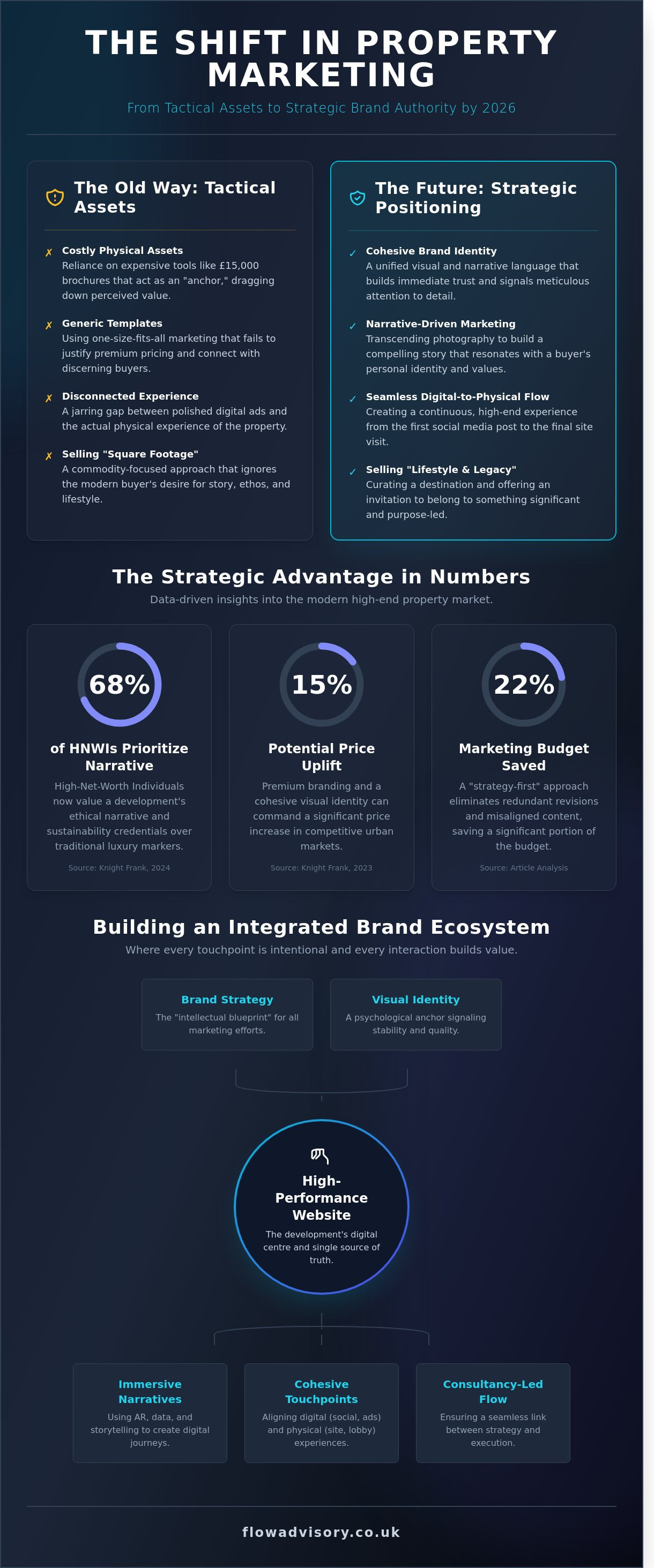
Property marketing is no longer a peripheral activity reserved for the final stages of a construction project. By 2026, the most successful developers have realised that effective property marketing services represent the precise intersection of brand strategy, visual identity, and digital experience. It's a holistic ecosystem where every touchpoint must feel intentional. While tactical asset collection focuses on the immediate need for a brochure or a basic website, strategic positioning looks toward the long-term value of the asset. It's the difference between merely listing a building and curating a destination.
The UK market has undergone a fundamental shift. Buyers in 2026 don't just look at floor plans; they scrutinise the developer's ethos and the project's contribution to the local fabric. A 2024 study by Knight Frank indicated that 68% of high-net-worth individuals now prioritise the ethical narrative and sustainability credentials of a development over traditional luxury markers. This "purpose-led" approach requires a narrative that transcends physical boundaries. We've moved beyond selling "square footage" to selling "lifestyle and legacy." A strategic approach ensures that a development isn't viewed as a commodity, but as a meaningful contribution to a resident's identity.
The Evolution of the Property Marketing Mix
Traditional methods haven't disappeared, but they've been fundamentally reimagined. The static print brochures of the past decade have evolved into immersive digital narratives that use augmented reality and real-time data to tell a story. This real estate marketing evolution reflects a deeper need for emotional resonance in high-end real estate. Premium developments in London or the Home Counties can't rely on "one-size-fits-all" marketing packages. Instead, they require bespoke digital journeys that mirror the exclusivity of the physical space, ensuring the digital "first look" is as impactful as the eventual site visit.
Why Strategy Must Precede Creative Execution
Launching straight into creative production is a common, yet expensive, mistake. Commissioning high-end photography or 3D visualisations before defining the brand’s visual identity often leads to a disjointed message that fails to convert. When a clear strategy is established first, it acts as a filter for every subsequent decision, saving up to 22% of the total marketing budget by eliminating redundant revisions and misaligned content. Property brand strategy is the "intellectual blueprint" for all future marketing efforts. By establishing this foundation, developers ensure that every pound spent on creative execution works toward a unified, high-value perception of the project.
Success in the current climate depends on this level of foresight. It's about creating a sense of "flow" where the transition from seeing an initial social media post to walking through the finished lobby feels like a single, continuous experience. When the strategy is sound, the marketing doesn't feel like a sales pitch; it feels like an invitation to belong to something significant.
The Foundation of Success: Brand Strategy and Visual Identity
Branding isn't an aesthetic afterthought; it's the strategic soul of a development. Effective property marketing services begin by deconstructing the architectural intent to uncover a project's "why". We don't just look at floor plans. We examine the social fabric of the location. By 2024, the UK residential market has become increasingly sophisticated, and buyers are no longer moved by generic luxury. They seek a narrative that resonates with their personal identity. Defining a development’s unique market position requires an analytical look at the competition. If three other developments in a two-mile radius target young professionals, your brand must pivot. It might focus on "quiet productivity" or "urban sanctuary" to capture a specific, underserved niche.
Visual identity acts as a powerful psychological anchor for potential investors. A 2023 report by Knight Frank suggests that premium branding can command a 15% price uplift in competitive urban markets. This isn't accidental. When an investor encounters a consistent visual language, it signals stability and attention to detail. A cohesive identity reduces the perceived risk of an off-plan purchase. It suggests that if the developer has been this meticulous with a typeface, they'll be equally rigorous with the building's structural integrity. This alignment between the brand and the architectural vision is what creates a sense of "place" before a single stone is laid.
Consistency across every touchpoint is non-negotiable. A specific colour palette and bespoke typography must flow seamlessly from a physical site hoarding to a high-end brochure; then finally to a digital interface. This creates a "halo effect" where the quality of the marketing reflects the quality of the life on offer. If you're looking to refine your project's positioning, exploring a tailored strategic approach can help clarify your development's unique value proposition and ensure it stands out in a crowded marketplace.
Defining the Purpose and Narrative
Uncovering the "story" of a new build involves more than listing features. It's about place-making. For a heritage restoration in Bristol, the narrative might lean into the 19th-century industrial grit, reimagined for modern living. For a new build in Manchester, it might focus on the future of sustainable tech-hubs. We speak directly to aspirations by identifying the "hero" of the story. Understanding the broader context of Federal Property Management standards provides a useful benchmark for how high-level asset communication should be structured. It's about creating a legacy, not just a building.
Creating a Distinctive Visual Language
A comprehensive visual system goes far beyond a logo. It includes a hierarchy of "colours" that evoke specific emotions; deep forest greens for tranquility or sharp metallics for innovation. A 2022 study by the Design Council found that for every £1 invested in design, businesses see a £20 increase in revenue. This value is most evident in the digital experience. The brand must feel as tactile and premium on a smartphone as it does in a physical sales suite. We ensure the typography is legible for older investors while remaining sharp enough to attract a younger, design-conscious demographic. This fluidity ensures the brand remains resilient across the entire property lifecycle.
Beyond Photography: Why Your Property Brand Needs a Narrative
Aesthetics alone cannot sustain a premium price point. While stunning imagery captures initial attention, it’s the underlying story that secures the deposit. Most developers rely on a transactional approach; they list features and hope the CGI does the heavy lifting. This strategy often fails to account for the emotional complexity of a £500,000 investment. A sophisticated property marketing strategy recognises that a building is a shell until a narrative gives it purpose. By moving beyond the surface, you create a sense of place that resonates with the buyer’s identity.
High-quality content builds long-term authority. When a developer shares insights on urban regeneration or sustainable architecture, they shift from being a vendor to a thought leader. This transition is vital for credibility. Data from a 2023 UK housing study suggests that 64% of buyers feel more confident purchasing from brands that demonstrate a clear vision beyond the construction phase. Narrative-driven collateral acts as a silent partner for your sales team. It provides them with a consistent vocabulary to justify premium pricing. Instead of defending a square-foot cost, they're selling an entry point into a curated community. This consultative feel distinguishes a brand from competitors who merely push units through a pipeline.
The Role of Marketing Collateral in the Buyer Journey
The journey from a digital ad to a physical brochure must feel seamless. Each touchpoint should reinforce the central theme. Effective Real Estate Marketing Strategies often focus on answering objections before a prospect even enters the marketing suite. If your content addresses local infrastructure, school catchments, and long-term capital growth, you've already dismantled the primary barriers to sale. For large-scale developers, thought leadership content in the form of white papers or community impact reports adds a layer of institutional trust that renders cannot provide. This flow ensures the buyer feels supported, not pressured, throughout the process.
Visual Storytelling Through Digital Assets
Integration is more important than isolation. Video and CGI shouldn't sit in a gallery; they should weave into the broader brand story. Human-centric photography is essential here. Showing a family in a sun-drenched kitchen or a professional in a home office creates a visceral connection that empty rooms lack. A property’s narrative is the bridge between a building’s cost and its value. In the competitive 2024 UK market, where 15% of new build sales are driven by brand perception, professional property marketing services ensure that your development isn't just seen, but truly understood. This approach transforms a property from a commodity into a lifestyle choice.
- Strategic Alignment: Ensure every blog post and social update feeds back into the core project identity.
- Emotional Resonance: Use "human-centric" assets to show the life possible within the walls.
- Objection Handling: Use narrative content to proactively address concerns about local amenities or build quality.
- Value Perception: Bridge the gap between the technical specifications and the lived experience.
The modern buyer is discerning. They've seen thousands of perfect renders and are often desensitised to them. What they haven't seen is a developer who understands their aspirations. By investing in a narrative, you aren't just selling bricks and mortar; you're offering a future. This depth of engagement is what allows a brand to scale and maintain its reputation across multiple schemes.
Building an Integrated Marketing Ecosystem for Your Development
A brand ecosystem isn't a collection of separate assets; it's the living network of every digital and physical touchpoint a buyer encounters. This system represents the silent dialogue between the developer and the prospect. When these elements align, they create a sense of inevitability around the purchase. This holistic approach ensures that your property marketing services don't just generate fleeting interest but build a sustainable narrative of value.
Constructing this ecosystem requires a disciplined, four-step sequence to ensure no capital is wasted on fragmented efforts:
- Establishing the digital centre: Your website must function as the high-performance heart of the brand. It's the only environment where you have total control over the user journey.
- Contextual collateral: Marketing materials must resonate with the specific London or UK micro-market. A scheme in Marylebone requires a different aesthetic weight than a regeneration project in Barking.
- Internal alignment: Your sales agents are the physical manifestation of the brand. If their communication doesn't mirror the marketing promise, the ecosystem breaks.
- Momentum through content: A 2023 study by the Content Marketing Institute found that 72% of successful B2C brands use consistent content to maintain engagement during long sales cycles. Construction updates and community stories prevent the "black hole" of silence between reservation and completion.
Effective property marketing services integrate these steps into a seamless flow. It's about moving away from "campaigns" and towards a permanent brand presence that gains equity over time. In the Q1 2024 RICS UK Residential Market Survey, developers who maintained a consistent brand presence saw a 12% higher retention rate of enquiries compared to those using sporadic, discount-led tactics.
The Website as a Digital Sales Suite
Generic templates fail because they can't convey the bespoke nature of a luxury development. A premium website should mirror the physical "flow" of a property viewing. According to 2023 data from Google, a 1.2 second delay in page load time can reduce conversion by 7%. Your UI/UX must be invisible; it should guide the user from a sweeping drone shot of the London skyline to a detailed floor plan without friction. We focus on integrating lead capture forms that feel like a concierge service rather than a data harvest, preserving the premium aesthetic while securing vital buyer information.
Internal Alignment and Brand Culture
The behaviour of your sales team is the most potent marketing tool you possess. If an agent's tone is aggressive while the brochure promises "tranquillity," the buyer senses a cognitive dissonance that kills trust. We use internal communications to ensure every stakeholder speaks the same brand language. This turns a standard sales force into a group of brand ambassadors. When the team understands the "why" behind the architectural choices, they sell with a level of conviction that no PDF can match. It's about creating a culture where the development's values are lived, not just printed on a hoarding.
If you're ready to move beyond fragmented tactics and build a resilient brand system, partner with Flow Advisory to refine your strategy.
Elevating Your Property Brand with Flow Advisory
Brand equity is often the most undervalued asset on a developer’s balance sheet. At Flow Advisory, we move beyond the standard checklist of property marketing services to implement a consultancy-first model. We believe that a development’s success relies on "flow," which is the precise alignment of site potential, architectural vision, and the emotional journey of the buyer. This isn't just about aesthetics; it’s about ensuring that every touchpoint, from the initial hoarding to the final completion pack, speaks with a single, authoritative voice. We don't just sell units. We curate environments where people already feel at home before the first brick is laid.
The UK property market has seen a 14% increase in buyer enquiries for developments that lead with sustainability and lifestyle narratives rather than just square footage. Working with a boutique firm allows for a level of agility that larger, volume-heavy agencies often lack. We understand the nuances of the UK planning system and the specific expectations of buyers in competitive regions like the Home Counties or the revitalised urban centres of Manchester and Birmingham. Our approach ensures that your marketing spend isn't just a cost, but an investment in a reputation that makes your next land acquisition even easier.
Investing in a brand that lives beyond the initial sale creates a legacy. When a developer creates a cohesive identity, they're building a "trust premium" that can reduce future lead acquisition costs by up to 22%. We focus on the long-term narrative, ensuring that the community you build today becomes the strongest testimonial for your projects in 2027 and beyond. It’s about creating a sense of place that remains vibrant long after the sales team has moved on to the next site.
Our Strategic Approach to Premier Developments
We partner with developers to define, design, and deliver brands that stand up to intense market scrutiny. Our expertise lies in blending rigorous brand strategy with a sophisticated visual identity that captures the unique spirit of a postcode. We don't believe in templates. Every project is an opportunity to create a bespoke narrative that resonates with the specific demographics of the area. You can learn more about our intellectual and human-centred approach to see how we balance commercial objectives with psychological insights to drive results.
Start Your Brand Evolution
The shift from tactical marketing to strategic branding is the hallmark of the UK’s most successful developers. As we approach 2026, the industry is moving toward a model where brand depth carries more weight than surface-level advertising. Data from 2024 indicates that 68% of property buyers now research a developer's corporate reputation and previous projects before they ever step foot in a show home. This makes 2026 the year to prioritise the "why" behind your developments. We invite you to discuss your next project with our strategic team to ensure your property marketing services are working as hard as your architects do.
Mastering the 2026 Property Landscape
The 2026 property landscape demands a shift from transactional listings to immersive brand experiences. Success in high-end London markets no longer relies on standard photography. It requires a cohesive narrative that connects with the human element of a development. Since 2020, Flow Advisory has helped developers navigate this complexity by bridging the gap between internal communications and external brand identity. By treating a development as a living ecosystem rather than a series of assets, you ensure long-term value and scalability.
Modern property marketing services must integrate strategic focus with visual precision to stand out in a crowded UK market. Whether you're launching a new residential project in Mayfair or scaling a commercial portfolio, your brand's story is your most valuable asset. Our approach combines business terminology with an understanding of organisational culture to deliver measurable results. We don't just show the way; we walk it with you. It's time to move beyond the surface and build something that resonates.
Partner with Flow Advisory to define your property’s strategic narrative
Frequently Asked Questions
What is the difference between property marketing and property branding?
Property branding establishes the core identity and emotional resonance of a development, while property marketing services focus on the tactical distribution of that message to generate leads. Think of branding as the "why" that creates a 15% higher perceived value; marketing is the "how" that drives the 300 monthly enquiries needed to meet sales targets. A brand creates a lasting legacy, whereas marketing secures the immediate transaction.
How much should I budget for property marketing services in the UK?
Developers should typically allocate between 1% and 2.5% of the Gross Development Value (GDV) for comprehensive property marketing services. For a £10 million scheme, this equates to a budget of £100,000 to £250,000 covering everything from CGI production to lead generation. High-end luxury developments in London often see these figures rise toward 3% to ensure the collateral matches a £2,000 per square foot price point.
When is the best time to hire a property marketing agency for a new development?
The optimal time to engage a partner is during the pre-planning stage, ideally 12 to 18 months before the first unit is released. Starting early allows the brand narrative to influence architectural choices and interior finishes, ensuring the final product aligns with market demand. Waiting until the hoarding goes up often results in a 20% increase in customer acquisition costs due to a lack of strategic foundation.
Does my development really need a full visual identity, or is a logo enough?
A logo is merely a signature, but a full visual identity is the entire language that communicates premium quality to a discerning buyer. Research shows that developments with a cohesive visual system see a 22% faster sales rate than those relying on a standalone logo. A complete identity includes typography, colour palettes, and textural guidelines that make a £750,000 apartment feel like a curated lifestyle rather than just a floor plan.
How does brand strategy help in a slow property market?
Brand strategy acts as a protective buffer during market downturns by shifting the conversation from price to unique value. In a 2023 market analysis, branded developments maintained their asking prices 12% better than unbranded competitors during interest rate hikes. Strategy ensures your project isn't just another commodity; it becomes a specific destination that buyers feel safe investing in despite economic volatility.
What role does social media play in premium property marketing?
Social media serves as a digital window into the lifestyle of a development, with Instagram and LinkedIn driving up to 40% of initial organic interest for premium schemes. It's not about constant selling; it's about building a 24/7 narrative through high-quality video and behind-the-scenes content. For homes priced over £1.5 million, social platforms provide the essential social proof that validates a buyer's emotional connection to the brand.
Can property marketing services help with internal team alignment?
Strategic property marketing services provide a unified "north star" that aligns sales agents, architects, and stakeholders under one clear vision. When every team member understands the brand's core values, internal friction decreases by roughly 30% during the delivery phase. This clarity ensures the person selling the penthouse at the 18-month mark delivers the exact same promise that the marketing team made during the initial launch.
How do you measure the ROI of a strategic property brand?
ROI is measured through the lens of sales velocity and the reduction in cost per qualified lead. A strategic brand typically achieves a 10% price premium over local benchmarks, which directly offsets the initial investment in marketing. We track conversion rates from initial enquiry to reservation; a strong brand often sees these rates improve by 15% compared to generic market entries.