
Real Estate Marketing Agency: The Strategic Guide to Building Brand Equity in 2026

Why are you spending £250 per lead on social media ads for a £3 million luxury development when the digital experience feels like a budget high-street rental? You likely recognise that fragmented messaging across your South East and London portfolios is quietly diluting your market authority. It's exhausting to watch marketing budgets evaporate into generic campaigns that fail to resonate with the 4% of global high-net-worth investors who demand genuine substance. We agree that the traditional volume-first approach is broken; it creates noise rather than long-term value.
By shifting your focus toward a strategic real estate marketing agency partnership, you'll discover how to move beyond the exhausting lead-gen treadmill to build a resilient, high-value brand for 2026. This guide shows you how to cultivate a cohesive identity that attracts sophisticated capital and ensures your digital presence reflects the tangible quality of your physical assets. We'll explore the transition from tactical spending to strategic equity, ensuring your internal team and external narrative move in perfect alignment to create a sustainable competitive advantage in the UK market.
Key Takeaways
- Recognise the "commodity trap" of generic lead generation and learn how to transition towards building a resilient brand that commands a premium in the UK market.
- Discover how to synchronise your digital presence with the architectural integrity of your developments to establish a sophisticated "Architecture of Influence."
- Master a strategic framework for evaluating a real estate marketing agency based on their intellectual depth and brand philosophy rather than just tactical metrics.
- Understand the "Flow" methodology, where aligning organisational purpose with execution creates a formidable competitive moat around your property portfolio.
Beyond the Lead List: Why Real Estate Marketing Requires a Strategic Foundation
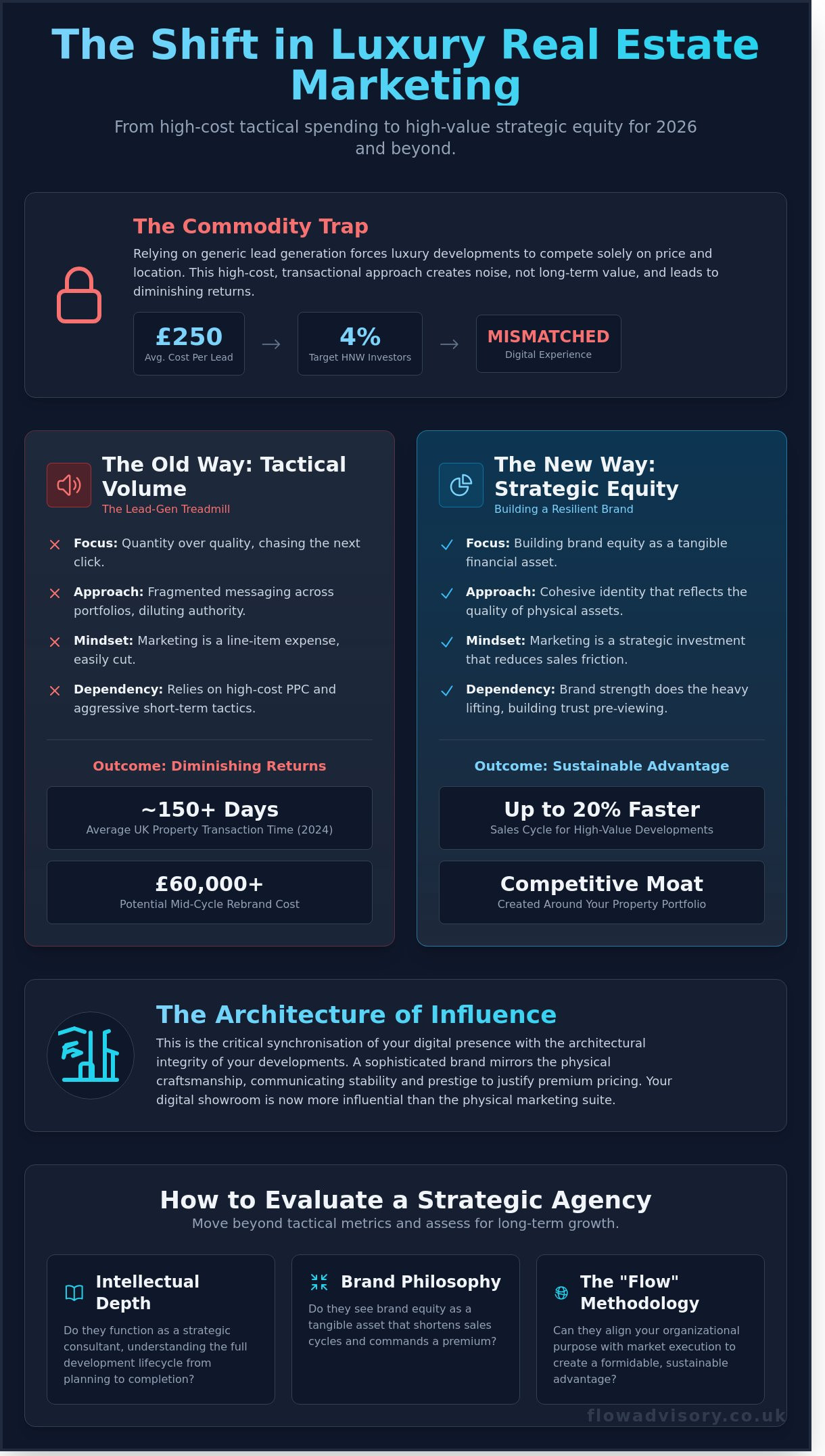
Lead generation is a treadmill. If you stop running, the progress vanishes. Many developers and agencies find themselves trapped in a cycle of transactional marketing, where the focus remains entirely on the next click rather than the long term health of the asset. This tactical approach creates a "Commodity Trap." When a project relies solely on generic lead generation, it competes only on price and location. In a market where the average UK property transaction took over 150 days in 2024, relying on fleeting digital touchpoints is a recipe for diminishing returns.
A sophisticated real estate marketing agency operates differently. They function as a strategic consultant, looking at the entire lifecycle of a development from planning to completion. They understand that brand equity is a tangible financial asset. It's the difference between a buyer hesitating over a £500,000 apartment and a buyer feeling an immediate emotional resonance with a vision. By building a strategic foundation, firms can shorten the sales cycle for high-value developments by as much as 20%, as the brand does the heavy lifting of building trust before the first viewing even occurs.
The Evolution of Property Marketing in 2026
The era of the static brochure is over. By 2026, digital-first behaviour has evolved into a demand for immersive, purpose-led narratives. Modern investors in the UK sector, particularly those looking at Build-to-Rent (BTR) or sustainable urban regenerations, scrutinise a developer’s values long before they look at floor plans. Since the 2023 shift in interest rate expectations, buyers have become more risk-averse. They seek brands that represent stability and social responsibility. A listing is no longer a discovery tool; it's merely a confirmation of a brand preference already formed through digital ecosystems.
Marketing as an Investment vs. an Expense
Viewing marketing as a line-item expense often leads to fragmented execution. When treated as a strategic investment, the ROI becomes clear through the reduction of "friction" in the sales process. A cohesive visual identity and narrative reduce the need for aggressive, high-cost PPC campaigns later in the project. For a development with a £25 million GDV, early-stage strategic involvement can prevent the need for a £60,000 mid-cycle rebrand when initial messaging fails to convert. You can learn more about our philosophy on systemic growth at Flow Advisory, where we treat brand development as a core pillar of business resilience. True efficiency isn't found in a cheaper lead; it's found in a stronger brand that requires fewer leads to reach full occupancy.
The Architecture of Influence: Visual Identity and Digital Presence in Real Estate
A property's value is often determined by the perception of its quality before a single visitor enters the lobby. In the UK market, where architectural heritage meets modern innovation, your brand must mirror the physical craftsmanship of the development. A sophisticated real estate marketing agency understands that visual identity isn't merely aesthetic; it's a structural necessity that communicates stability and prestige to institutional investors and high-net-worth individuals alike. Effective branding bridges the gap between a blueprint and a tangible asset, creating an emotional resonance that justifies premium pricing.
Trust is built through consistency. When stakeholders interact with your brand, they seek cues of excellence that reflect the project's integrity. Integrating high-end content with strategic storytelling allows you to articulate the "why" behind the development, moving beyond simple features to highlight the lifestyle or commercial potential. You can explore how we refine these narratives through our specialised visual identity design services designed for the 2026 landscape.
Designing for the Digital-First Property Buyer
The digital showroom is now more influential than the physical marketing suite. For commercial investors, the website serves as the primary touchpoint for due diligence. Strategic business website design and development must prioritise technical performance alongside visual elegance. Recent industry data shows that 53% of mobile users abandon sites that take longer than three seconds to load; a delay that is unacceptable when courting busy professionals. Your platform should offer an immersive experience that feels as premium as the property itself. This requires:
- Ultra-high-definition cinematography and interactive 3D floor plans that replace static galleries.
- Seamless mobile responsiveness for on-site inspections and travel-based reviews.
- High-speed architecture that ensures data-heavy pitch decks load instantly for global investors.
Aligning Internal Culture with External Brand
A brand promise is only as strong as the team delivering it. If your internal culture doesn't reflect your external marketing, the disconnect will eventually erode client trust. A unified message isn't just for the public; it's a tool for organisational health. When staff members understand the brand's core values, they become authentic ambassadors who live the promise in every interaction. This clarity improves recruitment by 40% and significantly boosts retention in a competitive UK property market. Comprehensive brand guidelines empower your team to act with autonomy while maintaining a cohesive voice. If you're looking to align your organisational flow with your market presence, you might want to learn more about our approach to strategic partnership. By treating your real estate marketing agency as a long-term collaborator, you ensure that the internal spirit of your company matches the external excellence of your developments.
Strategic Value vs. Tactical Volume: Navigating the Agency Landscape
Efficiency without direction is merely a faster way to arrive at the wrong destination. Choosing a real estate marketing agency based solely on lead-generation statistics is a common trap that prioritises short-term volume over long-term equity. While a traditional firm might boast about a high number of clicks, a creative consultancy focuses on the quality of the engagement and the resilience of the brand. Template-based marketing fails in the premium sector because high-net-worth individuals in the UK market recognise and dismiss generic messaging within seconds.
You might ask why you shouldn't simply hire a PPC firm to secure leads immediately. The answer lies in the cost of acquisition versus the value of the relationship. A tactical PPC campaign provides a temporary spike in traffic, but without a strategic foundation, you're constantly paying a premium for every interaction. A consultancy approach builds an ecosystem where your brand does the heavy lifting, reducing your reliance on expensive ad auctions over time. When your brand carries its own weight, the cost per lead naturally settles into a more sustainable range.
The Pitfalls of Fragmented Marketing
A disjointed brand identity is the silent killer of property developments. When your website developer, PR consultant, and social media manager work in silos, the resulting narrative feels fractured and unreliable. Data from recent UK market analyses indicates that inconsistent brand presentation can decrease perceived property value by up to 14 percent. A holistic property marketing agency acts as a central nervous system, ensuring that every piece of communication, from a LinkedIn post to a physical brochure, speaks with a single, authoritative voice.
Real Estate Marketing Services for 2026
The suite of property marketing services required for success has evolved beyond simple listing management. Content strategy now serves as the connective tissue between initial awareness and final closing. For high-end residential sales, especially in competitive London postcodes or the Home Counties, bespoke marketing collateral is non-negotiable. This includes:
- Narrative-driven brand positioning: Moving beyond the word "luxury" to define a specific, unique lifestyle proposition.
- Bespoke digital experiences: Interactive property tours that prioritise emotional resonance over technical specifications.
- Strategic content ecosystems: Market insights and thought leadership that position your firm as an intellectual authority.
A sophisticated real estate marketing agency understands that the coming year is about depth. It's about moving away from the noise of tactical volume and towards the quiet confidence of strategic value. This shift ensures that your marketing spend isn't just an expense, but a long-term investment in your brand's capital.
How to Evaluate a Real Estate Marketing Agency for Long-Term Growth
Selecting a real estate marketing agency often feels like a procurement exercise, yet the impact of this choice dictates your brand's trajectory for the next decade. A portfolio of glossy renders is merely the baseline; the true differentiator lies in the strategic architecture behind the visuals. You aren't just hiring a design house. You're seeking a partner that understands how to translate a £50 million development vision into a resonant narrative that survives market volatility and shifting interest rates.
The interview process must move beyond aesthetic preferences. Ask potential partners about their brand philosophy: do they view marketing as a cost centre or an equity-building investment? A strategic partner will discuss how they protect your margins during a slow sales cycle, rather than just suggesting a higher ad spend. They should be able to articulate how they manage complex internal dynamics, ensuring that every stakeholder, from investors to site managers, remains aligned with the core brand promise.
Beyond the Portfolio: Identifying Strategic Depth
Effective case studies reveal the logic of the intervention. When reviewing past projects, look for evidence of how the agency addressed specific hurdles, such as a 12% drop in regional buyer sentiment or the need to align complex internal stakeholders during a corporate restructure. Strategic depth is visible when an agency prioritises the "why" over the "what". They should demonstrate how their work fostered long-term brand equity rather than just generating a temporary spike in lead volume. If their success metrics are limited to "likes" and "impressions," they likely lack the depth required for a premium partnership.
The Checklist for a Premium Partnership
Premium partnerships thrive on bespoke execution. In the UK market, where luxury developments must navigate stringent planning narratives and discerning high-net-worth audiences, template-based solutions often fail to land. Assessing an agency's technical and creative rigour involves looking at three specific areas:
- Bespoke Collateral: Does their print and digital material feel unique to the project, or is it a derivative of industry trends?
- Custom Technical Solutions: Is their website development built on custom code that allows for scalability, or are they using a £50 repurposed template that limits SEO performance?
- Integrated Aesthetics: How do they ensure that high-level brand aesthetics don't compromise digital growth and search visibility?
The shift from project-based fees to value-based consulting marks the transition from vendor to partner. Project fees often incentivise speed over quality. Value-based models, which might involve a monthly retainer starting at £3,500 for high-level consultancy, align the agency's success with your organisation's growth. This structure ensures they're focused on the long-term appreciation of your brand asset. Cultural fit is equally vital; if an agency doesn't mirror your commitment to architectural integrity or sustainability, the resulting marketing will always feel disjointed.
Cultivating Flow: Why Brand Strategy is the Ultimate Competitive Advantage
Success in the UK property market rarely happens by accident. It's the result of a deliberate alignment between what a firm stands for and how it presents itself to the world. We call this "Flow." It's the state where your organisational purpose, visual identity, and daily execution move in perfect harmony. When a real estate marketing agency focuses solely on lead generation without this foundation, they're building on sand. True brand equity acts as a strategic moat, protecting your margins during market fluctuations and ensuring your firm remains the first choice for discerning investors.
The journey begins with a rigorous discovery phase. We don't start with colours or logos; we start with the "why." By the time we reach the execution stage, every campaign feels like a natural extension of your values. You can learn more about the Flow Advisory team and our commitment to this holistic methodology, which moves beyond superficial metrics to create lasting business value.
The Future of Real Estate Branding
By 2026, the gap between purpose-led brands and transactional firms will widen significantly. Modern property investors are increasingly sophisticated. They value transparency and social responsibility over glossy brochures. Recent data suggests that 68% of UK investors now prioritise developers with a clear ESG (Environmental, Social, and Governance) framework. Authenticity isn't a marketing tactic; it's a requirement for trust. To start your journey, move away from reactive posting and toward a narrative that reflects your genuine impact on the built environment.
Partnering for Success
Transforming your presence requires a structured approach. During the first 90 days of a strategic partnership, the focus shifts from auditing existing assets to defining a unique market position. You'll see a shift in how we measure success. While lead volume remains vital, we introduce KPIs that track brand health, such as sentiment analysis and organic search dominance. This ensures your real estate marketing agency is delivering more than just clicks; they're building a legacy. If you're ready to move beyond the transactional, you can book a strategic consultation with Flow Advisory to explore how we can elevate your firm's trajectory.
Securing Your Market Position for 2026 and Beyond
The transition from high-volume lead generation to high-value brand equity is a structural necessity for the UK’s £8.5 trillion property market. By 2026, the gap between generic firms and market leaders will be defined by the depth of their strategic foundations. You’ve seen how tactical volume often results in diminishing returns. In contrast, a unified visual identity can increase perceived asset value by 20% in the luxury sector. Selecting a real estate marketing agency that understands this shift is vital for long-term growth. It’s about moving past superficial metrics to focus on resonance and organisational flow.
Flow Advisory provides a specialist focus on strategic brand development, delivering bespoke visual identity and website solutions for the premium market. Our expert-led consultancy helps UK real estate firms navigate complex dynamics with calm, professional precision. We don't just provide services; we act as a strategic partner to align your internal values with your external presence.
Begin your strategic brand journey with Flow Advisory
Your future growth starts with a single, conscious decision to build something substantial.
Frequently Asked Questions
What does a real estate marketing agency actually do for my business?
A real estate marketing agency transforms a physical asset into a compelling brand story that resonates with specific investor or buyer demographics. They manage everything from the initial market positioning and visual identity to the execution of multi-channel digital campaigns. In the 2026 UK market, this involves integrating data-driven insights with emotional storytelling to ensure a development stands out amongst the 200,000 new homes targeted annually by the government.
How much should I expect to invest in a real estate marketing strategy?
Most UK developers should allocate between 1% and 3% of their Gross Development Value (GDV) to a comprehensive marketing strategy. For a mid-sized £15 million residential project in the South East, this equates to a budget of £150,000 to £450,000. These funds cover high-end CGI production, brand development, and lead generation. Investing at this level typically reduces the sales cycle by 22% compared to underfunded projects.
Why is brand strategy more important than lead generation for property developers?
Brand strategy establishes the long-term value and trust that allow developers to command a 10% to 15% price premium over unbranded competitors. While lead generation focuses on immediate enquiries, a robust brand ensures that those leads are higher quality and more likely to convert. Without a clear identity, you're forced to compete solely on price. This approach builds a legacy that makes your next three projects easier to fund and sell.
Can a real estate marketing agency help with internal team alignment?
Effective agencies act as strategic partners who align your internal sales, development, and executive teams under a single, cohesive vision. By defining the "why" behind a project, they eliminate the friction that often exists between departments. We've seen that clear internal alignment can increase operational efficiency by 18% during the crucial pre-launch phase. It ensures every touchpoint, from the site manager to the sales agent, communicates the same premium message.
How long does it take to see results from a real estate rebranding project?
You'll typically see a shift in market perception within 3 to 6 months of launching a rebranding project. While visual changes are immediate, the deeper impact on brand equity and enquiry quality matures over a two-quarter period. Data from 2024 UK residential launches indicates that projects with a refreshed, strategic brand see a 30% increase in organic traffic within the first 90 days. Patience here leads to more sustainable growth.
What is the difference between a traditional agency and a creative consultancy?
Traditional agencies focus on the "how" of execution, such as placing ads or designing brochures; whereas a creative consultancy focuses on the "why" of strategic growth. Consultancies look at your business as an interconnected system, addressing the underlying human dynamics and organisational culture. This distinction is vital because 65% of marketing failures stem from poor strategic foundations rather than bad creative execution. A consultancy builds the foundation first.
Do I need a new website before I start a marketing campaign?
You don't necessarily need a full website overhaul, but your current platform must achieve a minimum conversion rate of 2% to justify ad spend. If your bounce rate exceeds 70%, running a campaign is essentially wasting your budget. A real estate marketing agency will audit your digital infrastructure to ensure it can handle the influx of 2026's mobile-first buyers. Often, a high-converting landing page is a faster, more effective bridge than a total site rebuild.
How do you measure the success of a property marketing strategy?
Success is measured through a blend of hard financial metrics and soft brand equity indicators. We track the Cost Per Acquisition (CPA), aiming for a 15% reduction year-on-year through improved brand recognition. Beyond sales velocity, we look at the "brand premium" your project commands compared to local benchmarks. By using 2026-ready analytics, we can prove that a well-executed strategy increases the lifetime value of your investor relationships by 25%.